Maximizing an outdoor living area becomes a priority when summer arrives in the Lower Mainland. Long evenings invite family barbecues, patio dining, and late nights under the stars. Achieving the perfect atmosphere requires moving past standard exterior floodlights. High-end properties now utilize sophisticated illumination systems to highlight architectural features, pathways, and mature gardens well after the sun sets.
Achieving a luxury look involves choosing systems built specifically for the local climate. Lower Mainland properties face distinct geographic and environmental conditions that quickly ruin standard retail products. Working with a qualified specialist ensures your system remains reliable, safe, and beautiful through every season.
Overcoming Local Weather and Installation Challenges
Designing outdoor illumination in our region requires addressing specific environmental challenges. Homeowners frequently encounter common frustrations when attempting to upgrade their exterior spaces with standard retail options.
Surviving the Coastal Moisture
The primary concern for any local outdoor installation is our persistent coastal rain. Standard retail fixtures often suffer from moisture ingress, which causes internal condensation, lens clouding, and short circuits. Water entry destroys delicate components, leading to premature system failure. Professional installations solve this by utilizing commercial-grade fixtures with high Ingress Protection ratings, such as IP65 or IP67, which feature robust rubber gaskets and sealed housings engineered to keep water out.
Moving Past Solar Limitations
Many homeowners pick solar-powered plastic stakes from big-box retailers to avoid trenching cables. This choice often leads to disappointment. Our frequent overcast skies and short winter days mean solar cells rarely collect enough energy to power lights for more than a few dim hours. A hardwired low-voltage LED system connects directly to your home power supply through an exterior transformer, ensuring consistent, crisp illumination regardless of the daily weather.
Protecting Your Turf and Gardens
A common worry during an electrical upgrade is the potential damage to mature turf, flower beds, and custom stonework. Nobody wants their pristine summer yard torn up by heavy excavation machinery. Specialized technicians use clean, minimally invasive techniques to run low-voltage lines. Cables are placed in protective conduit and tucked neatly beneath sod lines, behind retaining walls, or inside landscape borders, leaving your yard looking untouched once the project wraps up.
Top Trends in Backyard LED Design
Modern exterior illumination focuses on creating depth, safety, and visual texture. Rather than blinding your guests with harsh spotlights, contemporary designs utilize layered, subtle light sources.
Architectural Wall Washing and Uplighting
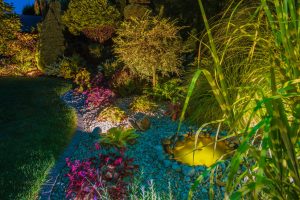
Highlighting structural textures adds instant luxury to a home facade. Wall washing involves placing fixtures at the base of stone, brick, or cedar features, directing a wide beam upward to highlight natural variations. Uplighting focuses narrower beams on structural pillars or mature trees, such as Japanese Maples or structural conifers, creating dramatic focal points that draw the eye across the property.
Safe Pathway and Step Lighting
Safety and design work together along walkways and stairs. Flush-mounted riser lights fit directly into stone or timber steps, casting light downward onto the treads. Path fixtures with shielded caps direct soft arcs of light downward onto walkways, preventing glare while ensuring guests can walk safely around the property.
Hidden Moonlighting Techniques
Moonlighting creates a natural, soft effect by placing fixtures high within the branches of mature trees and directing light downward. This positioning filters the light through leaves and limbs, casting organic shadow patterns across lawns and patios below, mimicking the soft glow of a full moon.
Smart Controls and Zone Automation
Modern systems feature automated controllers that pair with smart home networks. Using astronomical clocks, these setups automatically track shifting local sunset times throughout the shifting seasons, turning lights on exactly when darkness falls. Systems can also be split into separate zones, allowing you to dim patio lights for outdoor movies while keeping perimeter pathways bright for home security.
Evaluating Your Home Power Capacity
Before installing an extensive exterior system, home power availability must be evaluated. While modern LED setups use significantly less energy than old halogen bulbs, adding multiple transformers, outdoor kitchen appliances, patio heaters, or hot tubs can strain an outdated electrical service.
Older properties across the Lower Mainland often operate on original 100 Amp panels. If you plan to add extensive exterior features alongside modern upgrades like heat pumps or electric vehicle chargers, you may experience frequent breaker trips. Upgrading your service panel ensures your property accommodates growing power demands safely. Reviewing your home capacity with a professional helps determine if an upgrade from 100A to 200A in residential homes is required before adding new equipment.
Integrating Green Energy Solutions
Many local homeowners prioritize sustainability when upgrading their properties. Pairing low-energy LED systems with renewable energy generation helps offset your household carbon footprint and lower your utility bills.
Investing in home solar generation allows you to run your architectural lighting, outdoor entertainment hubs, and climate control equipment using clean energy collected during the day. Integrating residential infrastructure with BC Hydro net-metering programs lets you bank excess summer generation for credit during darker winter months. Homeowners exploring these green additions can view options for installing residential solar panels to build an eco-friendly property from the roof down to the lawn.
Step-by-Step Professional Installation Process
A professional exterior installation requires precise planning to guarantee longevity in wet conditions. Certified technicians follow a structured process to complete the project without creating mess or hazards.
1. Conceptual Design and Layout Consultation
Technicians walk the property after dark or use daytime scaling maps to identify key architectural features, focal trees, and safety hazards along paths. Designers select the correct beam angles and color temperatures, typically opting for warm tones between 2700K and 3000K, to complement West Coast architecture.
2. Loading and Circuit Calculations
The total wattage of all planned fixtures is calculated to select the right transformer sizes. Experts split the system into balanced zones, ensuring voltage drops do not cause lights at the end of a long line to appear dim or flickering.
3. Safe Conduit and Cable Placement
Technicians lay out lines using low-impact trenching. Heavy-duty, direct-burial cables are housed inside protective PVC conduit where they cross high-traffic walkways or garden beds, shielding the system from future shovel strikes during gardening.
4. Precision Connection and Weatherproofing
Fixtures are mounted and connected using silicone-filled wire nuts designed specifically for underground moisture protection. Transformers are mounted securely on exterior walls or inside utility areas, and connected to dedicated GFCI outlets.
5. Final Evening Aiming and Adjustment
Once darkness falls, the installation crew performs final adjustments. Fixtures are angled precisely to eliminate glare, highlight textures accurately, and hide light sources from direct view, completing the clean aesthetic. For more inspiration on design patterns, view these creative backyard lighting ideas to see how various techniques look in practice.
FAQs
Can landscape lighting be installed in the winter?
Yes, installations can proceed during the winter, though frozen soil or heavy snowfall can make digging more difficult. Wet weather requires extra care to keep open wire connections completely dry during assembly, which is why dry summer or spring windows are generally preferred for clean trenching.
What is the difference between line voltage and low voltage systems?
Line voltage systems operate on standard 120-volt household power, requiring deep trenches, metal conduit, and deep junction boxes. Low voltage systems use a transformer to drop the power to 12V or 24V, making the system safer, more energy-efficient, and much easier to install around sensitive garden roots.
How do I prevent water from ruining my outdoor lights?
Ensure every fixture carries a minimum rating of IP65 for spray resistance, or IP67 if placed in low areas prone to pooling water. Always use grease-filled, waterproof wire connectors for underground splices, and seal exterior transformer boxes properly against driving rain.
How long do outdoor LED bulbs typically last?
High-quality landscape LEDs are rated to last between 30,000 and 50,000 hours. If operated for an average of five hours per night, these solid-state fixtures can perform reliably for over twenty years before needing replacement, outlasting old halogen bulbs significantly.