If you’re planning EV chargers for a workplace or public site, incentives can feel like a moving target. You’re trying to do the right thing, but three thoughts tend to show up fast:
- “I don’t understand what electrical work is required to qualify for incentives.”
- “I don’t want to spend money and then find out I’m not eligible.”
- “My building’s electrical system might not support EV chargers.”
This guide is your practical, no-drama checklist. It’s written to match what decision-makers considering commercial electrical services actually need: clarity on electrical scope, predictable costs, and fewer surprises.
Who this checklist is for
This is for:
- Property managers planning EV charging across one or multiple sites
- Business owners adding employee charging
- Site owners adding public charging for customers or community use
- Developers who want EV-ready infrastructure without future tear-outs
Even though TDR Electric’s home base is Ontario, the steps below are built around the BC incentive landscape, so you can write a fact-based, people-first piece that still converts. (Think: planning support + lead gen.)
EV charging incentives in BC: what programs are really funding
Before you talk wiring, you need to know which incentive stream you’re aiming for, because that shapes everything: equipment selection, layout, documentation, and timing.
Two common examples:
- Public charging (Go Electric BC – Public Charger Program): The program offers rebates for public DC fast chargers and Level 2 stations. The Go Electric BC page lists up to $80,000 per DC fast charger and $5,000 per Level 2 station, with higher amounts noted for Indigenous communities.
- Workplace charging (BC Hydro): BC Hydro states workplace owners may receive up to 50% of costs, to a maximum of $2,000 per charger and $14,000 per workplace, while funding lasts.
Why you should care: a site designed for “public charging” can have different expectations than a staff-only setup. Don’t guess. Pick the stream first, then design around it.
6 smart checklist steps
 1) Capacity reality check
This is the step that prevents the most expensive mistake: buying chargers your building can’t support.
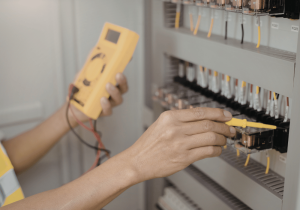
A commercial capacity review typically looks at:
- Main service size and available capacity
- Panel space and breaker availability
- Existing peak demand (when your building is already “busy”)
- Distance from electrical rooms to parking areas (routing impacts cost)
CleanBC Go Electric’s EV Charger Rebate Program overview confirms BC’s incentives are delivered through partners and tied to purchase + installation of chargers across different building types, including workplaces. That’s a hint that electrical readiness matters, not just buying hardware.
Quick signs you should do this first:
- Breakers trip during busy hours
- Panels are full, messy, or poorly labelled
- You’re adding other loads soon (HVAC upgrades, refrigeration, new tenants)
What to ask for: a short “capacity summary” that states how many Level 2 ports you can support now, plus what upgrades would increase that.
2) Pick the right charger “use case” first
Incentives and design decisions change based on how the chargers will be used. Ask this before you pick a brand or model:
- Workplace charging: typically predictable, longer dwell times
- Public charging: access, uptime, and site flow matter more
- Fleet charging: higher utilization and load planning, sometimes staged charging
The Go Electric BC Public Charger Program page notes it prioritizes projects that fill gaps in the public charging network and outlines rebate amounts for public DC fast and Level 2 stations.
Fast decision checklist:
- Who is the primary user (employees, customers, public, fleet)?
- What is the typical dwell time (30 minutes vs 8 hours)?
- Do we need DC fast charging, Level 2, or a mix?
The best “money move” is aligning the charger level to real-world site behaviour. Overbuilding can be as wasteful as underbuilding.
3) Scope commercial electrical services the right way
Once you know capacity + use case, you can scope the electrical work cleanly. This is where commercial electrical services become the backbone of incentive-ready planning.
A realistic scope often includes:
- Dedicated circuits and breakers per charger (or per load group)
- New distribution equipment (subpanels) if needed
- Conduit routing, trenching, coring, and mounting prep
- Signage power and lighting upgrades around the charging area
- Commissioning support (testing, labelling, handover)
If you’re writing this as a conversion piece, this is where you can add: “We’ll scope this with you and phase it if needed,” which directly addresses the “I don’t want to upgrade twice” pain.
Use this internal resource for readers who want incentive-specific guidance from TDR:
- “EV charging incentives” → https://tdrelectric.ca/ev-charger-installations-service/ev-charging-incentives/
4) Plan for expansion and uptime
 Most commercial sites don’t stop at “one charger forever.” EV adoption is increasing, tenant expectations rise, and fleets change.
This is how you avoid rework later:
- Oversize conduit where it makes sense
- Leave panel space or plan for a future distribution point
- Set a layout that can add chargers without moving everything
- Consider load sharing strategies (where appropriate) to support more ports
The Public Charger Program’s published guide (and its public-facing summary) emphasizes rebates tied to project costs and charger output tiers, which is another reason to design for long-term value rather than a quick install.
Simple expansion question:
“If we had to double the number of ports in 24 months, what would break first: capacity, parking layout, or conduit paths?”
5) Permits, protection, and safety basics
Incentive success isn’t only about hardware. It’s also about a professional installation that can pass inspection and operate safely.
At a minimum, your plan should consider:
- Permits and inspection requirements for your municipality
- Electrical protection (breakers sized correctly, safe wiring methods)
- Weatherproofing and physical protection (bollards, mounting height)
- Clear labelling and a safe, accessible site layout
For workplace rebates, BC Hydro clearly states the rebate structure and caps, and that funding is available while it lasts. That’s a reminder to plan permitting and timelines so your project doesn’t stall and miss a funding window.
Friendly disclaimer: Program rules and local permitting requirements can change. Always confirm the current rules on the official program page before purchasing equipment or starting construction.
6) Documentation that keeps incentives on track
This is the quiet reason many projects get delayed. Incentives often require proof, not vibes.
Create a project folder and keep:
- Final quote and detailed scope
- Equipment details (charger type, counts, location plan)
- Permit numbers and inspection sign-offs
- Paid invoices and proof of installation
- Photos (installed units, signage, site layout)
If you’re trying to qualify for EV charging incentives in BC, start with the official program page so you’re not guessing about eligibility, funding amounts, or required documentation. The Go Electric BC site lays out who can apply, what types of public chargers qualify, and what you’ll need to submit.
Use this link to confirm details before you scope electrical work:
- Go Electric BC — Rebates for public chargers: https://goelectricbc.gov.bc.ca/rebates-and-programs/for-businesses-and-organizations/rebates-for-public-chargers/
How to use this page in your planning
Before you book any commercial electrical services work, pull these details from the program page and align your project plan to them:
- Eligible applicant types: Make sure your organization and site type match what the program accepts.
- Eligible charger types + use case: Confirm the charger level, accessibility, and “public” requirements.
- Required documents: Note the forms, invoices, site details, and proof you’ll need.
- Project timing: Check rules on pre-approval, purchase/install dates, and submission deadlines.
- Technical expectations: Compare any listed requirements to your site’s electrical capacity and upgrade needs.
Quick tip: Bring the rebate requirements to your electrician early. It helps avoid paying for work that doesn’t support the incentive application.
Common mistakes that cause rework or lost eligibility
These are the failure points your audience is worried about. Call them out clearly:
- Buying chargers before confirming the incentive stream (public vs workplace rules differ)
- Skipping the capacity check and discovering you need major upgrades mid-project
- Under-scoping conduit and distribution work, then paying twice to reopen trenches/walls
- Missing documentation (invoices, photos, equipment details), which can delay reimbursement
- Assuming incentives are guaranteed despite caps and “while funding lasts” language
If your blog includes a quick “pre-buy checklist” box, this is where it goes.
Next step: get a quote and a plan
If you’re trying to unlock incentives, the fastest path is usually:
- capacity check
- incentive stream alignment
- scoped electrical plan
- permit + documentation plan
- installation and commissioning
EV charging incentives → https://tdrelectric.ca/ev-charger-installations-service/ev-charging-incentives/
contact TDR Electric → https://tdrelectric.ca/contact/
That’s the simplest way to turn “we’re thinking about chargers” into a real project with fewer surprises.
FAQs
1) What commercial electrical services are usually needed for EV chargers?
Most sites need a capacity review, dedicated circuits, conduit routing, and often panel or distribution upgrades depending on charger count and site layout.
2) Are there EV charging incentives in BC for public chargers?
Yes. Go Electric BC’s Public Charger Program offers rebates for public DC fast chargers and Level 2 stations, with published per-unit amounts and program priorities.
3) Do workplace EV charger rebates in BC cover installation?
BC Hydro states workplace owners who purchase and install eligible chargers can receive rebates up to 50% of costs, with maximums per charger and per workplace. Always confirm current eligibility and limits before purchasing.
4) What if our building doesn’t have enough electrical capacity?
You may need phased deployment, load management, or service upgrades. Start with a capacity check so you can set a realistic charger count and expansion plan.
5) What paperwork should we keep for incentive applications?
Keep quotes, equipment details, permit/inspection records, invoices, and photos of installed chargers and site setup. Program pages outline the key requirements and expectations.